PORTRAIT
Camille
Camille: The second opinion that changed everything
diagnosis
country
USA, Florida
age at diagnosis
53
diagnosed in
March 2012
Cancer center
Miami Sylvester Cancer Center
THEMES
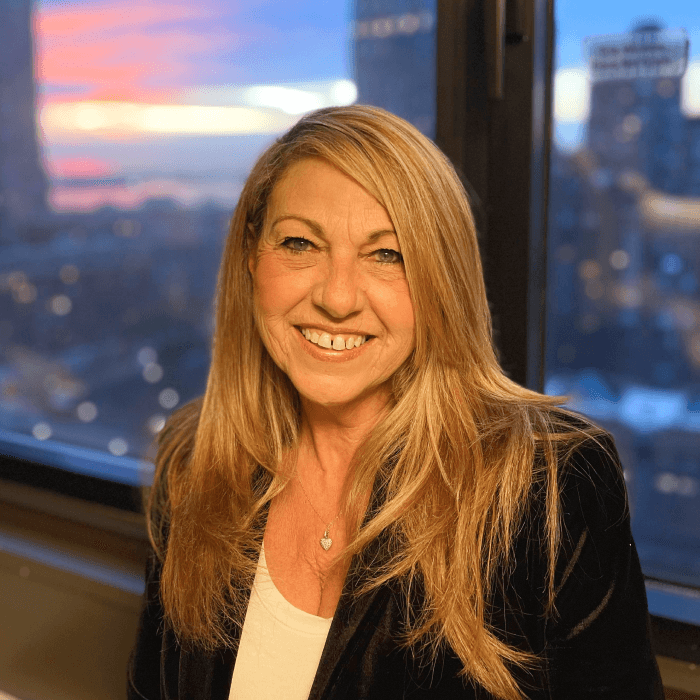
I'm a living proof!
Miami, Florida, USA: In 2012, Camille Moses was living in Miami with her three dogs and enjoying frequent trips back to her native New York City. At 53, she was active, independent and rarely thought about serious illness. When she began experiencing persistent lower back pain, fatigue and shortness of breath, cancer was the last thing on her mind.
Like many people diagnosed with pancreatic cancer, her symptoms were vague. The discomfort seemed easy to explain away: perhaps she was working too much, perhaps it was stress, perhaps simply the changes that come with age.
Everything changed when the pain became severe enough to send her to the emergency room. The scans revealed a mass in her pancreas and lesions in her liver and lungs. Further tests confirmed the diagnosis: stage IV pancreatic cancer.
A diagnosis she knew too well
Her diagnosis carried a particular weight. For Camille, the disease was not unfamiliar. She had already witnessed its impact firsthand. Nearly three decades earlier, Camille had lost her mother to pancreatic cancer at exactly the same age: 53.
As she tried to process the news, another blow followed. The first oncologist she met delivered a stark assessment: chemotherapy, he told her, was unlikely to help. According to the prognosis she received, she had approximately eight months to live. The recommendation was not to pursue aggressive treatment but instead to prepare for the end.
Many patients would have accepted that assessment. Camille did not.
Looking back, she often describes that moment as a turning point. Something about the certainty of the prediction seemed off to her. Before making any decisions, she wanted to hear another opinion.

"Dr. Rocha Lima looked at me and said, 'Stop crying and listen to me. This is going to work.'"


"No one should be told to go home and die. Get a second opinion."
The second opinion
That choice led her to the University of Miami Sylvester Comprehensive Cancer Center, where she met Dr. Caio Max Rocha Lima. The difference in approach was immediate.
"Some doctors told me I wasn't going to live. Others told me I was going to be okay. I chose to believe the people who thought I had a chance."
"Dr. Rocha Lima looked at me and said, 'Stop crying and listen to me. This is going to work.' The entire team believed it. They treated me as if there was a future ahead of me, and that gave me confidence. For the first time since my diagnosis, I believed I had a chance.”
Those words stayed with her as she began treatment with FOLFIRINOX, a combination chemotherapy regimen used for advanced pancreatic cancer.
Seventeen months of treatment
Over the following 17 months, she underwent 34 rounds of treatment. The treatment was demanding, and the side effects were significant. She lost weight, struggled with fatigue and faced the physical demands that come with long-term chemotherapy. There were days when simply getting through the next appointment felt like an achievement. Yet each scan brought encouraging news: the tumors were responding.
To cope with the uncertainty, Camille focused on creating milestones for herself. She planned trips back to New York City, where she had grown up, and looked for ways to maintain a sense of normalcy beyond hospital appointments and scans. Rather than measuring time in months, she began measuring it in experiences she still wanted to have.
The results gradually exceeded everyone's expectations. The tumors continued to shrink until there was no evidence of active disease. In July 2013, after an exceptional response to treatment, Camille was able to stop chemotherapy and begin what oncologists call a "chemo holiday."
More than a decade later, that holiday continues.
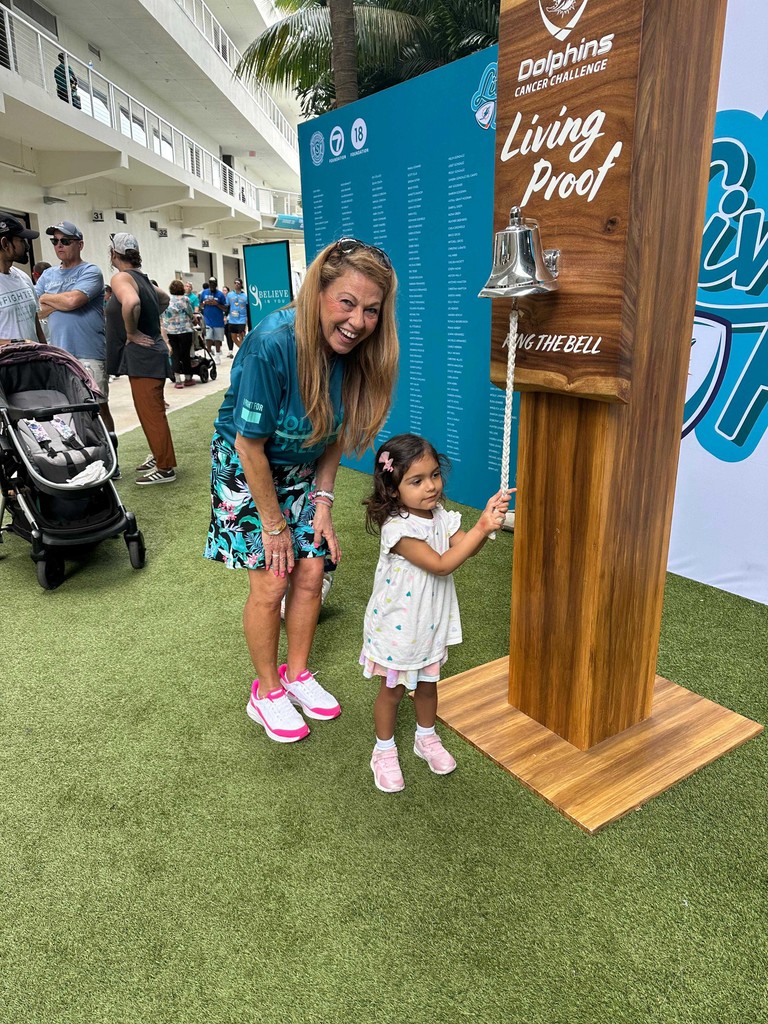
Turning survival into advocacy
More than a decade after completing treatment, Camille has turned her experience into a commitment to helping others. She is recognized as one of the longest-surviving patients with metastatic pancreatic cancer.
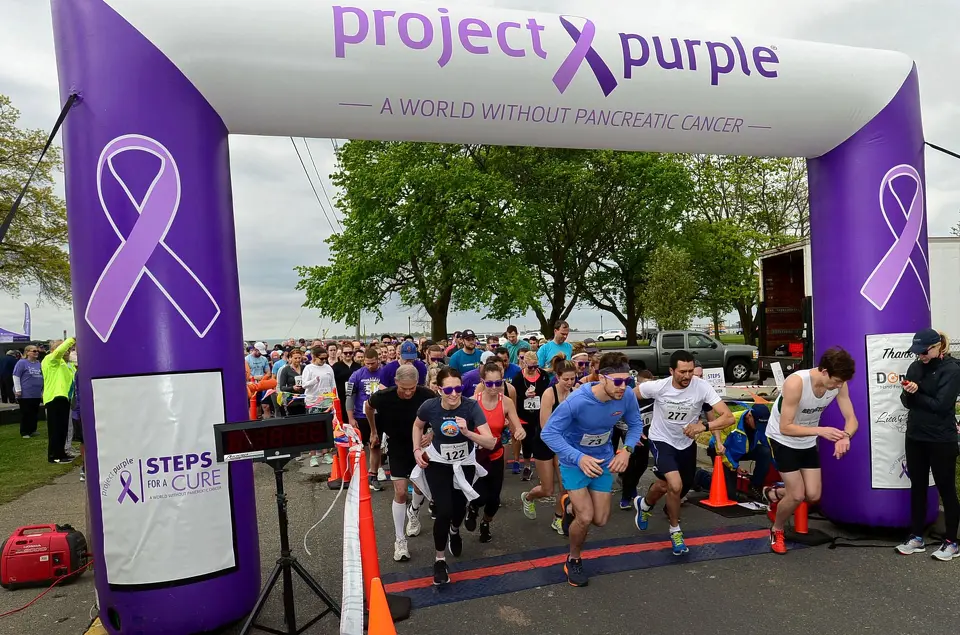
She remains deeply involved in the pancreatic cancer community through organizations such as Cure51, Project Purple, the Sylvester survivor community and the Dolphins Challenge Cancer. She regularly speaks with newly diagnosed patients, shares her experience at survivor events and supports fundraising efforts for pancreatic cancer research.
"Those doctors gave me hope when I needed it most. Today, I have the opportunity to do the same for other people. If I can help someone feel a little less alone, that's worth everything to me.”
Whether she is speaking with newly diagnosed patients, sharing her experience at survivor events or supporting research, Camille continues to advocate for the decision that changed the course of her own life.
"No one should be told to go home and die. Get a second opinion."
Explore more portraits

Coming UP
Yann
Embodies the Rosalind Study among outliers

Coming UP
Pamela
Raising awareness in Ireland

Coming UP
Dave
Turning strength into support for others


Coming UP
Samantha
A resilient voice from Las Vegas, now dedicated to global cancer advocacy